
Why Investors Move Into Multifamily
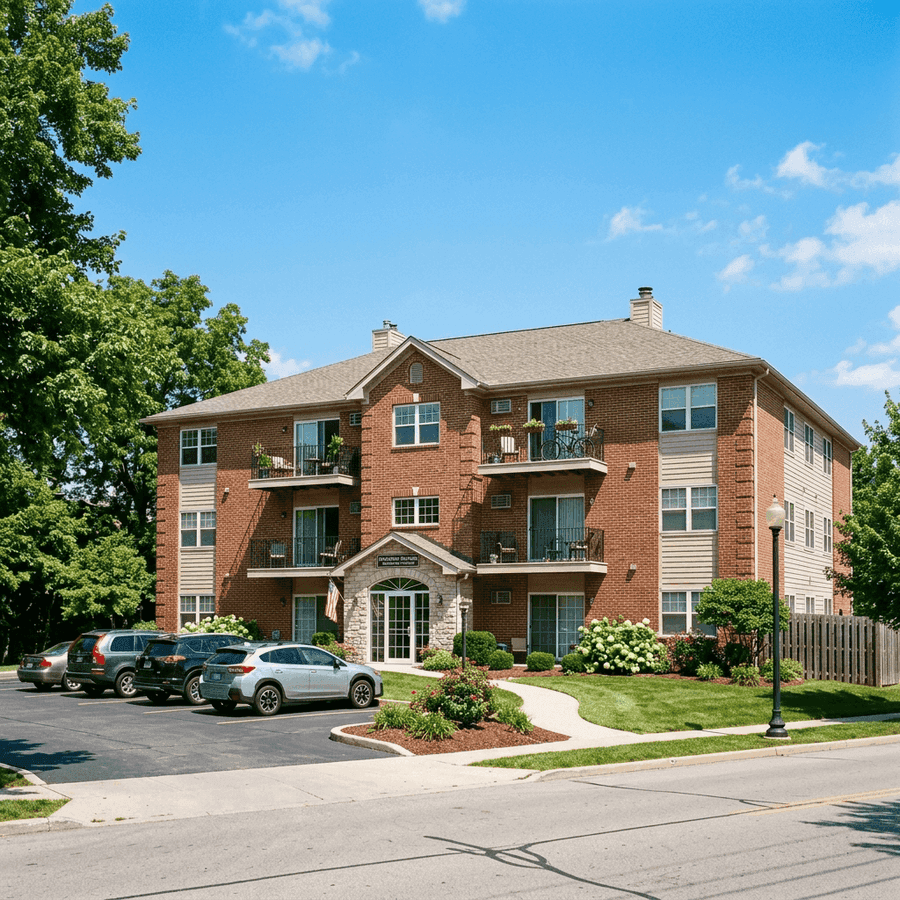
Multifamily is where many real estate investors go to scale, because one property can hold many income streams under a single loan. Instead of managing ten separate houses in ten locations, an investor owns one building with ten units — spreading vacancy risk, concentrating management, and producing meaningful monthly cash flow. With a record ~22.4 million rental households in 2025 and renters making up about 80% of new household formation, the demand base under apartments is deep and structural.
How Multifamily Is Valued: Income, Not Comps
Multifamily is valued on the income it produces, which is what makes it fundamentally different from a single-family home. A house is priced by comparable sales; an apartment building is priced by its net operating income (NOI) divided by a market capitalization (cap) rate. The practical consequence is powerful: an investor who raises rents or cuts expenses increases the building's value directly — a $50,000 lift in annual NOI at a 6% cap rate adds roughly $830,000 in value. This is why value-add multifamily is one of the most reliable ways to force appreciation.
How to Make Money With an Apartment Building
There are three core ways to profit from multifamily, plus variations. Buy-and-hold generates steady cash flow from many tenants and long-term appreciation. Value-add buys an underperforming building, renovates units and raises rents, and captures the increase in NOI and value. And build-to-rent develops new apartments to hold as rentals. Across all three, the income-based model means operational improvements translate straight into equity.
The Multifamily Market in 2026
The apartment market is normalizing in 2026 after several years of heavy new supply, and the fundamentals favor patient investors. Apartment investment volume reached about $165.5 billion in 2025 (MSCI), demand is strengthening — Q2 2026 net absorption hit 124,600 units, up 8% year over year (Cushman & Wakefield) — and new construction starts have fallen more than 40% from the 2022 peak, which means fewer competing units delivering in the years ahead. With a national housing shortage estimated at 4.3 million units by 2035, the long-term demand story remains firmly intact.
Small vs. Large Multifamily
Multifamily spans a wide range, and the entry point matters. Small multifamily — roughly 5 to 20 units — is the common on-ramp: it's financeable through agency small-balance and DSCR programs, manageable for a growing investor, and priced more like a hybrid of residential and commercial. Larger apartment communities are institutional assets, financed through agency, bank, and bridge debt and underwritten on full operating statements. Many investors start small, build a track record, and scale up.
How Multifamily Is Financed
Multifamily is financed based on the property's income and its stabilization. A stabilized building qualifies for long-term agency financing from Fannie Mae or Freddie Mac — often non-recourse, with rates for strong deals in the mid-5% to mid-6% range in 2026 — or bank debt. A value-add or transitional building is usually financed first with a bridge loan, then refinanced into permanent agency debt once stabilized. Because these loans qualify on the asset, investors can scale beyond what personal-income underwriting allows. (See the linked financing pages for details.)